


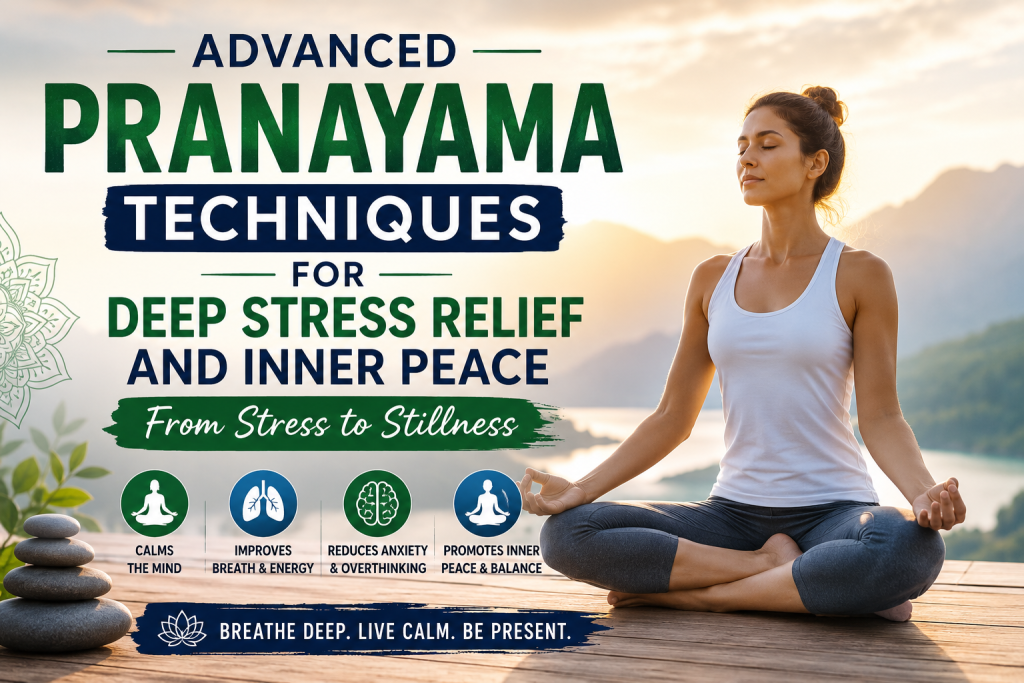
From Stress to Stillness
Introduction
In today’s fast-paced world, stress has become a constant companion for many. While modern solutions often focus on temporary relief, ancient yogic practices offer a deeper and more lasting transformation. Among these, pranayama, the science of breath control, stands as one of the most powerful tools to calm the mind and restore inner balance.
If you have already explored basic breathing techniques, it is time to move forward. This guide explores advanced pranayama techniques that help you transition from stress to stillness—bringing not only relaxation but also profound inner peace.
What is Pranayama?
Pranayama is derived from two Sanskrit words:
- Prana – Life force or vital energy
- Ayama – Expansion or control
Together, pranayama means the expansion and regulation of life energy through breath.
While basic breathing calms the body, advanced pranayama works on:
- The nervous system
- Mental clarity
- Emotional stability
- Spiritual awareness
Why Advanced Pranayama for Stress Relief?
Stress is not just mental—it affects your breath, heart rate, and nervous system. Advanced pranayama techniques directly influence these systems.
Key Benefits:
- Activates the parasympathetic nervous system (rest and relaxation)
- Reduces anxiety and overthinking
- Improves oxygen flow to the brain
- Enhances emotional control
- Promotes deep inner stillness
1. Nadi Shodhana (Alternate Nostril Breathing – Advanced Level)
How It Works:
This technique balances the left and right hemispheres of the brain, calming mental disturbances.
Steps:
- Sit in a comfortable meditative posture
- Close your right nostril and inhale through the left
- Close left nostril, exhale through right
- Continue in a rhythmic pattern
Advanced Practice:
- Use a ratio like 4:16:8 (inhale: hold: exhale)
- Focus on slow, controlled breathing
Benefits:
- Deep mental calmness
- Reduces stress and anxiety
- Improves focus and clarity
2. Bhramari Pranayama (Humming Bee Breath)
How It Works:
The humming sound creates vibrations that soothe the brain and nervous system.
Steps:
- Close your eyes and ears gently
- Inhale deeply
- Exhale with a humming “mmm” sound
Advanced Practice:
- Extend the humming duration
- Focus on vibration in the head region
Benefits:
- Instant stress relief
- Reduces anger and frustration
- Improves sleep quality
3. Ujjayi Pranayama (Victorious Breath)
How It Works:
This technique involves slight throat constriction, creating a soft ocean-like sound.
Steps:
- Inhale slowly through the nose
- Slightly contract the throat
- Exhale with a controlled sound
Advanced Practice:
- Combine with meditation
- Practice longer breath cycles
Benefits:
- Enhances concentration
- Calms the mind deeply
- Regulates body temperature
4. Kumbhaka (Breath Retention)
How It Works:
Kumbhaka is the pause between inhalation and exhalation, where stillness is experienced.
Types:
- Antar Kumbhaka – Retention after inhale
- Bahya Kumbhaka – Retention after exhale
Advanced Practice:
- Follow ratios like 1:4:2
- Practice under guidance if new
Benefits:
- Strengthens lung capacity
- Develops mental control
- Leads to deep meditative states
5. Sheetali & Sheetkari Pranayama (Cooling Breath)
How It Works:
These techniques cool the body and calm emotional disturbances.
Steps:
- Inhale through the mouth (rolled tongue or teeth)
- Exhale through the nose
Benefits:
- Reduces stress and anger
- Lowers body heat
- Promotes calmness
Daily Advanced Pranayama Routine (20–30 Minutes)
Follow this structured routine:
- Nadi Shodhana – 5 minutes
- Ujjayi Pranayama – 5 minutes
- Bhramari – 5 minutes
- Kumbhaka Practice – 5 minutes
- Meditation (Silent Sitting) – 5–10 minutes
Practical Example: From Stress to Stillness
Situation:
A person facing work pressure and anxiety.
Practice:
- Starts with Nadi Shodhana to balance breath
- Uses Bhramari to calm the mind
- Practices Kumbhaka to deepen awareness
Result:
- Reduced heart rate
- Clear thinking
- Emotional stability
Important Guidelines
- Practice on an empty stomach
- Sit in a quiet and clean place
- Do not strain the breath
- Start slowly and increase gradually
- Maintain consistency daily
Common Mistakes to Avoid
- Forcing breath retention
- Practicing too fast
- Ignoring posture
- Skipping warm-up breathing
- Practicing irregularly
FAQs
1. How long should I practice advanced pranayama daily?
20–30 minutes is sufficient for deep benefits.
2. Can beginners try advanced techniques?
Yes, but start slowly and preferably under guidance.
3. When is the best time to practice?
Early morning (Brahma Muhurta) or evening in a calm environment.
4. Does pranayama really reduce stress?
Yes, it directly affects the nervous system and promotes relaxation.
5. Can I combine pranayama with meditation?
Absolutely. In fact, pranayama prepares the mind for deeper meditation.
Conclusion
Advanced pranayama is more than a breathing exercise—it is a path from restlessness to stillness, from stress to inner peace. With regular and disciplined practice, you can experience a profound transformation in your mind, body, and overall well-being.
In a world full of noise and distraction, your breath becomes your anchor. Practice sincerely, remain patient, and allow the ancient wisdom of pranayama to guide you toward a calmer, more centered life.
Also Read on : The Science and Spiritual Power of Pranayama


